
Two Worlds Intertwined
Madam Chiang Kai-Shek And Her Lakes Region Home

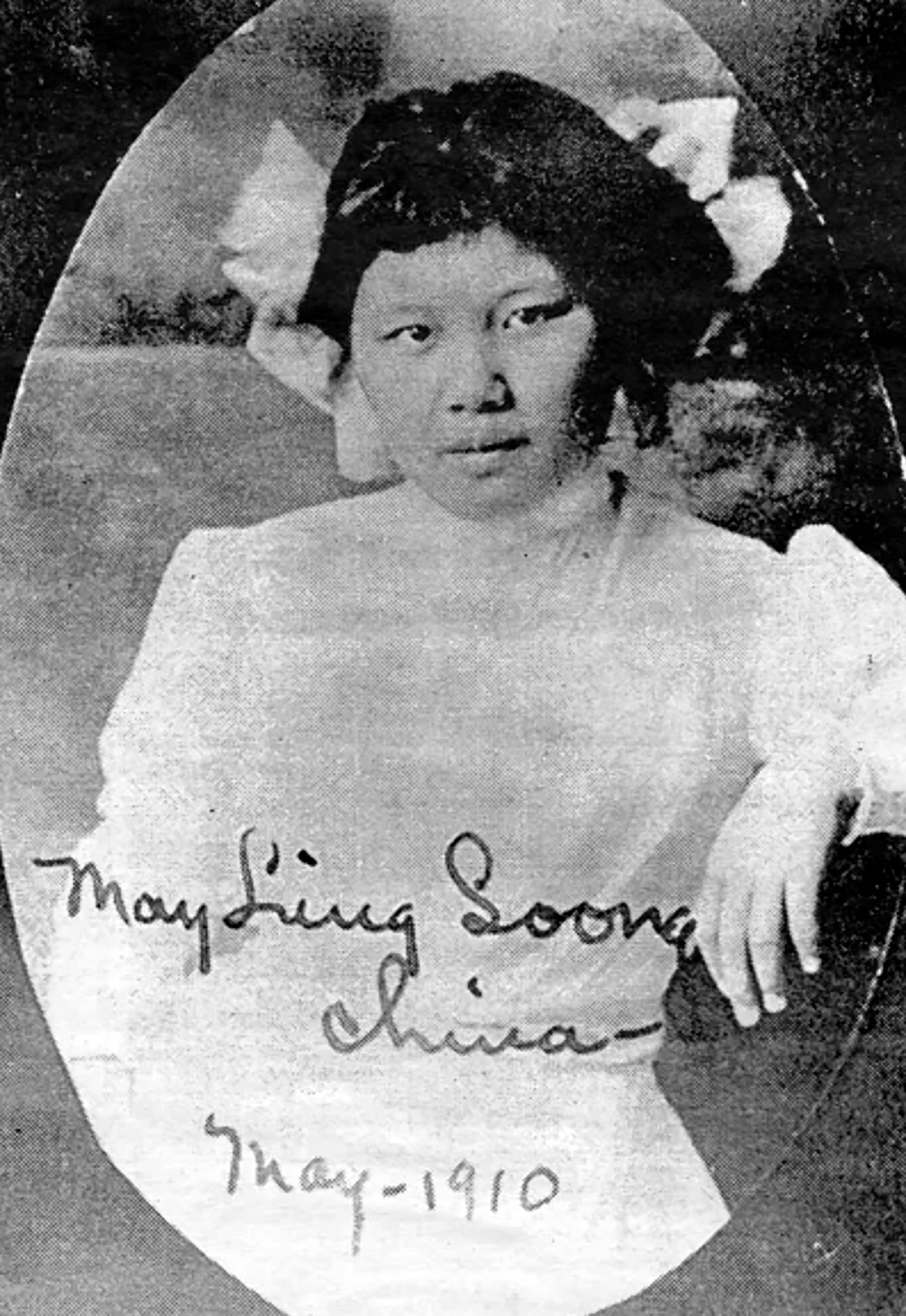
When President Donald Trump followed up a visit with Chinese leader Xi Jinping by announcing plans to meet Taiwan President Lai Ching-te, it refocused attention on the complicated relationship between the United States, China, and Taiwan. Ever since the US opened diplomatic relations with China in 1979, no US president had spoken directly with a Taiwanese president because China views the democratically governed island as its sovereign territory and demanded a hands-off relationship. For people in the Lakes Region, the new developments revive memories of its own connections with the founding of Taiwan.
Chiang Kai-shek, whose Nationalist Party broke free of mainland China and its rule by Chinese Communist Party leader Mao Tse-tung, married Soong Mei-ling, whose wealthy Chinese family had sent her and her sister, Ching-ling, to attend a school for girls in Meredith, operated by Hattie Moses. The girls were familiar faces in the town and, as historian Rudy VanVeghten, former publisher of the Meredith News, describes it in “The Future Madame Chiang Learns to Swim in Meredith” on the Meredith Historical Society’ website, “[T]hey certainly caused many heads to turn as they mingled among the residents of Meredith Village during the summers of 1908-1913.”
The girls’ father, Han Chiao-chun, later known as Charlie Jones Soong, had done an apprenticeship in the East Indies before sailing to the United States to work in his uncle’s tea shop in Boston. “Determined to procure an American education, he linked up with a Coast Guard cutter and came under the influence of Captain Eric Gabrielson, who called Chiao-chun ‘Charles Sun’. In addition, the captain converted the young man to Christianity, teaching him the precepts of Methodism,” VanVeghten writes. Returning to China as a missionary and marrying Ni Kwei-tseng, they raised six children, among them Ching-ling (“Happy Mood”) and Mei-ling (“Beautiful Mood”).
“Charlie’s Bible sales and industrial pursuits earned him a sizable fortune by 1900, a time when the old traditional ways of Chinese culture were increasingly challenged by Western influences,” VanVeghten writes. “The Boxer Rebellion of 1900 was followed by the spread of revolutionary ideas promulgated by Dr. Sun Yat-sen.” Charlie “realized how precarious the political situation had become and contrived to send his children off to American to continue their education.”
While attending the Potwin School near New York City, Ching-ling and Mei-ling met Harriet “Hattie” Moses, who operated a summer school on Meredith Point, and she brought them to Meredith in 1908. Ruth Colby, in her “Reminiscences of Meredith”, wrote, “Some of her New York pupils attended it. Among them one summer were the Soong sisters, Mei-ling and Ching-ling. Frances [Moulton, Hattie’s niece] invited me to go swimming one day, and the Soong sisters were there. I, of course, did not know that I was swimming with the future Madame Chiang Kai-shek. Her sister Ching-ling married Sun Yat-sen.”
After that summer in Meredith, the two Soong sisters moved to Wesleyan with their older sister, Ai-ling. Ching-ling, then 16, entered college as a freshman while Mei-ling, 11, stayed with the college president. A couple of faculty members tutored her, reporting her to be a precocious, quick-tongued little prodigy. After Ai-ling graduated in 1909, Ching-ling and Mei-ling continued their studies in Georgia “but watched with interest the events evolving in their homeland”. Mei-ling continued to spend her summers at Hattie Moses’ school.