

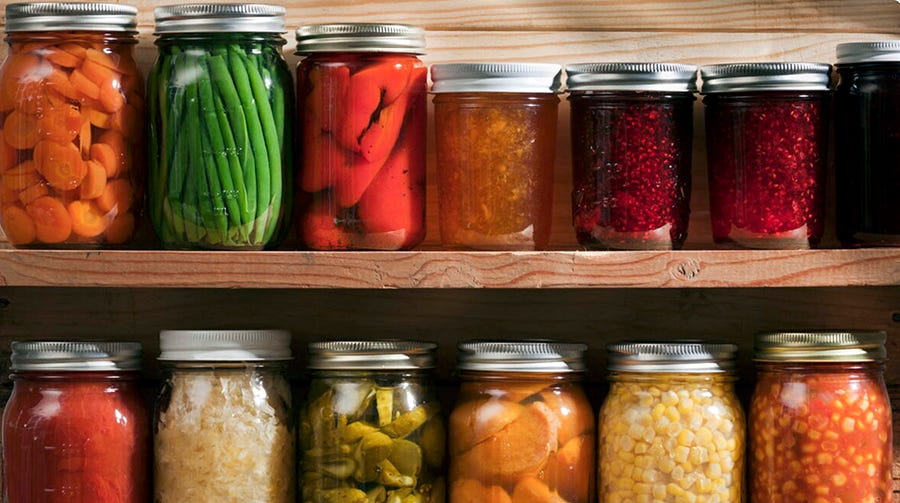
As grocery prices increase, and as people become more aware of how the quality of their health depends upon what they eat, there has been an increased interest in growing one’s own food and becoming more self-reliant. Those without the ability to cultivate their own gardens have come to rely on local farmers for fresh fruit and vegetables, as well as meat and dairy products.
One thing they then have to contend with is the seasonal surpluses that, unused, may result in spoilage; or the recognition that some foods may not be available during the winter months. Throughout history, humans have solved that problem by drying, salting, and fermenting foods. Since the late 18th century, that also has included canning.
The process of canning food began after Napoleon Bonaparte in 1795 offered a reward to anyone who could develop a safe, reliable food preservation method to supply his army during long periods away from home. Nicholas Appert took the task to heart and introduced a heat processing method using glass jars and sealing the lids with wire and wax.
Done properly, canning proved to be a safe method of food preservation, but it was not always easy. The high percentage of water in most fresh foods makes them very perishable, encouraging bacteria, molds, and yeasts to thrive. Microorganisms can quickly multiply on the surfaces of fresh food and on the inside of bruised, insect-damaged, and diseased food.
To avoid afflictions such as botulism, it is necessary to select and wash fresh food, discarding any potions that are damaged, and then to place it in jars or cans and heat the jars to a high enough temperature to destroy microorganisms. Canning also inactivates enzymes that could cause the food to spoil. Heating the can or jar drives out any air, and as it cools, it forms a vacuum seal that prevents air from getting back into the product and introducing microorganisms that might contaminate the food.
Two canning methods have emerged as safe and reliable ways to capture the best flavors at the peak of the season and preserve the food for consumption during the rest of the year: water-bath canning and pressure canning.
Low-acid foods, which are more susceptible to contamination by bacteria and toxins, must be processed using pressure canning. High-acid foods are able to block bacterial growth or destroy them more rapidly when heated, so they can safely be processed with either water-bath canning or pressure canning.